GSEB 10th Science Diagram Questions 2026 – Must-Draw Biology, Physics & Chemistry Diagrams with Labels
Ankit Singh
2 July 2026· Board Exams
Why Diagrams Can Make or Break Your GSEB 10th Science Score
Diagram questions in GSEB 10th Science are the fastest way to earn guaranteed marks — but they are also the easiest marks to lose. The reason is simple: most students know the diagram but cannot reproduce it cleanly under exam pressure because they have never practiced drawing it by hand.
A well-drawn, fully labelled diagram earns full marks (2–3 marks) even if your written explanation is weak. A poorly drawn diagram with missing labels earns 0–1 marks even if you understood the concept. Across a full Science paper, diagram questions can contribute 15–20 marks — the difference between a pass and a distinction.
This guide lists every diagram that GSEB has asked or is likely to ask, with all required labels, drawing tips, and the number of times the diagram appeared in previous years.
📌 Download 5 years of GSEB 10th Science question papers from our GSEB Papers page to see the exact context in which each diagram appears.
How to Draw Perfect Diagrams in the GSEB 10th Science Exam
Before listing the diagrams, master these technique rules. They apply to every diagram in every chapter:
- Use pencil for the diagram, pen for labels: Draw the entire diagram in HB pencil. After you are satisfied with the shape and proportions, write all label names in pen. Label lines themselves can be drawn with a pencil and ruler.
- Size matters: Draw diagrams at least 6–8 cm in their largest dimension. A diagram smaller than your thumb cannot show all labels legibly and will lose marks.
- Use a ruler for straight elements: All label lines, circuit diagram wires, ray diagram lines, and any straight edge must be drawn with a ruler. Freehand straight lines look unprofessional and can obscure the diagram.
- Label lines must not overlap the diagram: Draw label lines pointing outward from the part, ending at the label name. Labels should surround the diagram, not sit inside it (unless the part is very large).
- Write the title: Write the diagram name below or above it (e.g., "Fig: Human Heart"). GSEB examiners look for the title when scanning answer sheets.
- Show direction with arrows: Blood flow arrows, ray direction arrows, current flow direction — all arrows must be correctly drawn. A diagram without directional arrows misses 1 mark in most marking schemes.
- Shade/colour only if instructed: Unless the question says "draw a labelled diagram" with colours, avoid colouring. It wastes time and is not required.
Biology Diagrams — Chapter-wise List with Labels
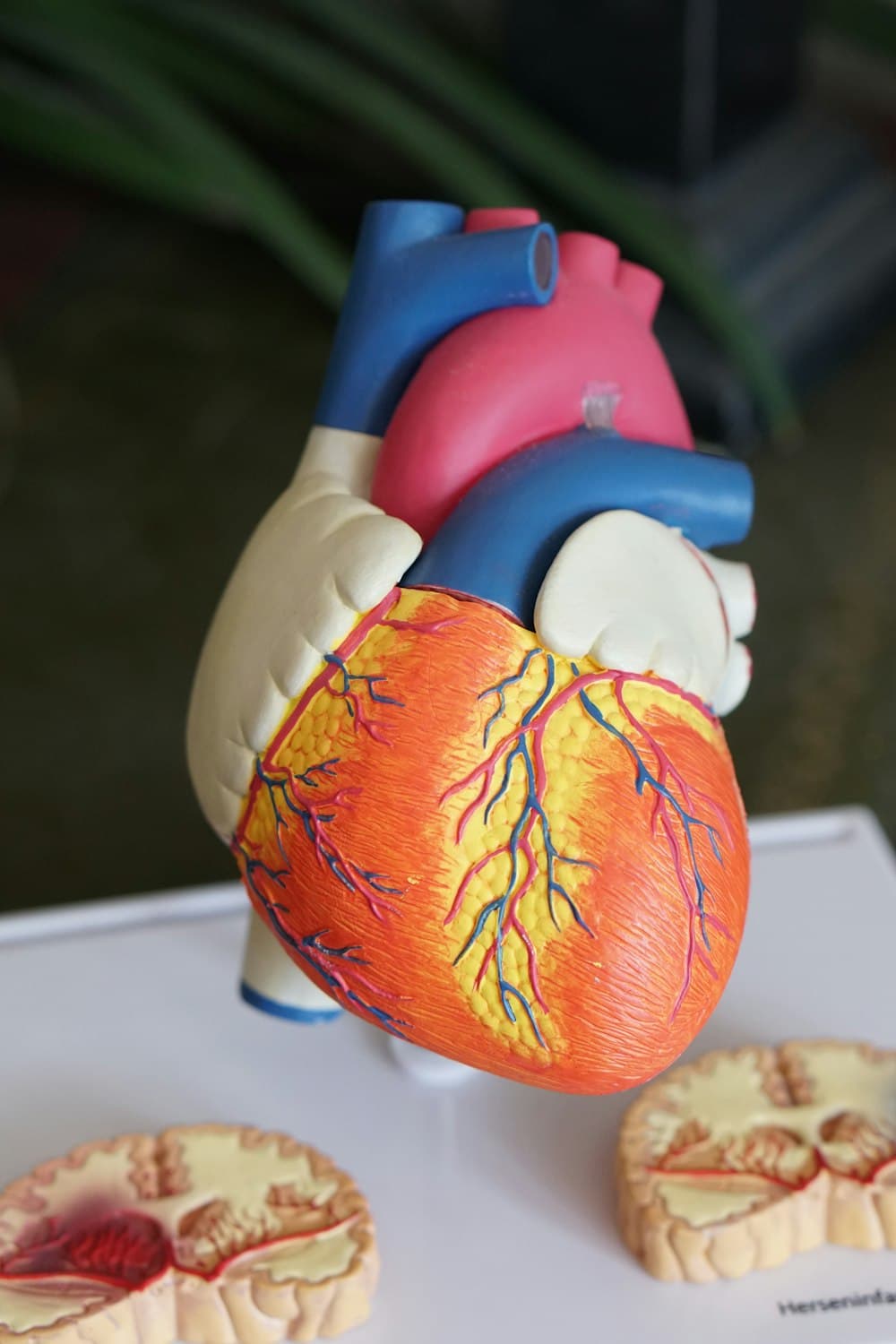
1. Human Heart Diagram
Chapter: Life Processes | Marks: 3 | Frequency: 5/5 years (appeared every year)
Required Labels (minimum for full marks):
- Right Atrium (RA) — receives deoxygenated blood from body
- Left Atrium (LA) — receives oxygenated blood from lungs
- Right Ventricle (RV) — pumps deoxygenated blood to lungs via Pulmonary Artery
- Left Ventricle (LV) — pumps oxygenated blood to body via Aorta (thickest wall)
- Superior Vena Cava — brings blood from upper body to RA
- Inferior Vena Cava — brings blood from lower body to RA
- Pulmonary Artery — carries deoxygenated blood from RV to lungs (only artery carrying deoxygenated blood)
- Pulmonary Vein — carries oxygenated blood from lungs to LA (only vein carrying oxygenated blood)
- Aorta — carries oxygenated blood from LV to entire body
- Tricuspid Valve — between RA and RV (prevents backflow)
- Bicuspid / Mitral Valve — between LA and LV
- Septum — wall separating left and right sides
- Arrows showing direction of blood flow
Exam Tip: The most common mistake is drawing the Pulmonary Artery going to the wrong side. Remember: Artery = Away from heart. The Pulmonary Artery goes FROM the Right Ventricle TO the lungs. Also remember: the Left Ventricle has the thickest wall (it must pump blood to the entire body).
2. Human Eye Diagram
Chapter: The Human Eye and the Colourful World | Marks: 3 | Frequency: 4/5 years
Required Labels:
- Cornea — transparent front cover of the eye (first refracts light)
- Iris — coloured muscular diaphragm; controls pupil size
- Pupil — hole in the iris through which light enters
- Eye Lens (Crystalline Lens) — biconvex, adjustable focus (accommodation)
- Ciliary Muscles — change the curvature of the lens
- Aqueous Humour — watery fluid between cornea and lens
- Vitreous Humour — jelly-like fluid between lens and retina
- Retina — light-sensitive layer at the back of the eye (forms image)
- Yellow Spot (Fovea) — point of highest visual acuity on retina
- Blind Spot (Optic Disc) — point where optic nerve exits; no photoreceptors
- Optic Nerve — carries visual signals from retina to brain
- Arrows showing path of light ray through the eye
3. Neuron (Nerve Cell) Diagram
Chapter: Control and Coordination | Marks: 2–3 | Frequency: 4/5 years
Required Labels:
- Cell Body (Cyton/Soma) — contains nucleus and cytoplasm
- Nucleus — inside the cell body
- Dendrites — short branched fibres that receive impulses; arrow pointing inward
- Axon — long single fibre that transmits impulses away from cell body; arrow pointing outward
- Myelin Sheath — fatty insulating layer around axon (speeds up transmission)
- Node of Ranvier — gaps in myelin sheath
- Schwann Cells — cells forming myelin sheath
- Axon Terminal (Synaptic Knobs) — endings of the axon
- Direction of impulse flow (arrow from dendrites → cell body → axon → axon terminal)
Exam Tip: Draw the axon much longer than the dendrites. Dendrites are shown as a cluster of short branches at one end of the cell body. Only one axon exits the cell body.
4. Stomata Structure Diagram
Chapter: Life Processes | Marks: 2 | Frequency: 3/5 years
Required Labels:
- Guard Cells (2 bean-shaped cells)
- Stomatal Pore (opening between guard cells)
- Chloroplasts (inside guard cells — makes them green)
- Epidermis Cells (surrounding the guard cells)
- Cell Wall (thicker on inner side of guard cell — shown as a thicker line)
5. Dicot Seed / Germination Diagram
Chapter: How Do Organisms Reproduce | Marks: 2 | Frequency: 3/5 years
Required Labels (Dicot Seed — e.g., Bean):
- Testa (Seed Coat) — outer protective covering
- Hilum — scar where seed was attached to pod
- Micropyle — tiny pore for water absorption
- Cotyledons (2 for dicot) — food storage leaves
- Plumule — embryo shoot (becomes the stem)
- Radicle — embryo root (becomes the root)
- Endosperm — food reserve (monocots have large endosperm; dicots store food in cotyledons)
Physics Diagrams — Chapter-wise List with Labels
6. Convex Lens Ray Diagrams (3 Cases)
Chapter: Light – Reflection and Refraction | Marks: 2–3 | Frequency: 5/5 years
Must Know for Convex Lens:
- Principal Axis — horizontal line through optical centre
- Optical Centre (O) — centre of the lens
- Principal Focus (F₁, F₂) — where parallel rays converge after refraction; mark on both sides
- 2F points — twice the focal length from optical centre; mark on both sides
| Case | Object Position | Image: Position | Image: Nature | Asked in |
|---|---|---|---|---|
| 1 | Beyond 2F | Between F and 2F (other side) | Real, inverted, diminished | Section B (very common) |
| 2 | At 2F | At 2F (other side) | Real, inverted, same size | Section B |
| 3 | Between F and lens | Same side as object (virtual, behind lens) | Virtual, erect, magnified (magnifying glass) | Section B + C |
For each ray diagram, draw THREE standard rays:
- A ray parallel to the principal axis → after refraction, passes through F₂
- A ray through the optical centre → passes straight through (no bending)
- A ray through F₁ → after refraction, travels parallel to the principal axis
7. Electric Circuit Diagram Symbols
Chapter: Electricity | Marks: 2 | Frequency: 5/5 years
GSEB examiners frequently ask students to draw a circuit diagram with specific components, or to identify components from a given circuit. Memorize these standard symbols:
| Component | Symbol Description | Common Mistake |
|---|---|---|
| Battery (Cell) | Long line (+) and short line (−) in pairs | Drawing only one cell for a battery |
| Switch (Open) | Line with a gap/break in the circuit | Forgetting to show the gap (open vs closed) |
| Switch (Closed) | Continuous line at an angle closing the gap | — |
| Resistor | Rectangle or zigzag line | Drawing a plain rectangle (must show it's a resistor) |
| Ammeter | Circle with 'A' inside | Placing in parallel (must be in series) |
| Voltmeter | Circle with 'V' inside | Placing in series (must be in parallel) |
| Bulb / Lamp | Circle with a cross (×) or filament inside | — |
| Rheostat | Rectangle with arrow (variable resistor) | Drawing a plain resistor instead |
Series vs Parallel Circuit Drawing Rules:
- Series: All components connected end-to-end in a single loop. Same current flows through all.
- Parallel: Components connected across the same two points (side by side branches). Same voltage across all.
- Ammeter: always in series (if placed in parallel, it short-circuits the branch)
- Voltmeter: always in parallel across the component being measured
8. Concave Mirror Ray Diagrams
Chapter: Light – Reflection and Refraction | Marks: 2–3 | Frequency: 4/5 years
Required Labels on any mirror diagram:
- Mirror (concave — curved inward, like a cave)
- Principal Axis
- Pole (P) — centre point on the mirror surface
- Centre of Curvature (C) — centre of the sphere the mirror is part of
- Principal Focus (F) — midpoint between P and C
- Radius of Curvature (R = 2f) — distance from P to C
- Object arrow (pointing upward, on the left of the mirror)
- Image arrow (with correct position, size, and orientation)
- Incident and reflected rays with arrows
9. Magnetic Field Lines Around a Bar Magnet
Chapter: Magnetic Effects of Electric Current | Marks: 2 | Frequency: 3/5 years
Required Labels and Rules:
- North Pole (N) and South Pole (S) of the bar magnet
- Field lines emerge from N, loop around, and enter at S (outside the magnet)
- Field lines inside the magnet go from S to N
- Field lines are closest together (densest) near the poles — indicating strongest field
- Field lines never cross each other
- Arrows on field lines must point from N to S (outside)
- Label: "Strong field near poles (lines dense), Weak field at equator (lines sparse)"
Chemistry Diagrams — Chapter-wise List with Labels
10. Electrolysis of Water Apparatus
Chapter: Chemical Reactions and Equations / Acids, Bases and Salts | Marks: 2–3 | Frequency: 4/5 years
Required Labels:
- Battery / DC Power Source
- Switch
- Positive Electrode (Anode) — connected to positive terminal of battery
- Negative Electrode (Cathode) — connected to negative terminal of battery
- Electrolyte Solution (dilute H₂SO₄ or NaOH solution)
- Oxygen gas collected at Anode (volume = ½ of Hydrogen)
- Hydrogen gas collected at Cathode (volume = 2× Oxygen)
- Test tube over each electrode (inverted to collect gas)
- Arrows showing direction of conventional current
- Chemical equations: Cathode: 4H⁺ + 4e⁻ → 2H₂ | Anode: 2H₂O → O₂ + 4H⁺ + 4e⁻
Exam Tip: The most common mistake is putting Oxygen at the cathode and Hydrogen at the anode. Remember: Hydrogen → Higher (cathode). Oxygen → goes to the positive side (anode). Ratio is always H₂:O₂ = 2:1 by volume.
11. Carbon Cycle Diagram
Chapter: Our Environment | Marks: 3 | Frequency: 3/5 years
Required Components in the Flow Diagram:
- CO₂ in Atmosphere (central reservoir)
- Photosynthesis arrow (Plants absorbing CO₂ from atmosphere → Glucose)
- Respiration arrow (Plants and Animals releasing CO₂ back to atmosphere)
- Combustion arrow (Burning fossil fuels releasing CO₂)
- Decomposition arrow (Decomposers breaking down dead matter → CO₂)
- Fossil Fuels (coal, oil, gas) as a reservoir
- Ocean absorption arrow (CO₂ dissolving in ocean water)
- Arrows must clearly show direction with labels on each arrow
Chapter-wise Diagram Frequency Table (GSEB 10th Science 2020–2025)
| Chapter | Diagram | Frequency (Years) | Marks |
|---|---|---|---|
| Life Processes | Human Heart | 5/5 | 3 |
| Light — Reflection & Refraction | Convex Lens Ray Diagram | 5/5 | 2–3 |
| Electricity | Circuit Diagram | 5/5 | 2 |
| The Human Eye | Human Eye | 4/5 | 3 |
| Control & Coordination | Neuron Structure | 4/5 | 2–3 |
| Acids, Bases & Salts | Electrolysis Apparatus | 4/5 | 2–3 |
| Life Processes | Stomata | 3/5 | 2 |
| Magnetic Effects of Current | Magnetic Field Lines | 3/5 | 2 |
| Light — Reflection & Refraction | Concave Mirror | 3/5 | 2–3 |
| Our Environment | Carbon Cycle / Food Web | 3/5 | 2–3 |
| How Do Organisms Reproduce | Flower Parts / Seed | 2/5 | 2 |
Common Mistakes in GSEB 10th Science Diagram Questions
- Not labelling the diagram title: Every diagram needs a title (e.g., "Fig: Human Heart"). Without it, the examiner cannot confirm which diagram you drew.
- Missing arrows on blood flow / light rays / current: Arrows are part of the diagram, not decoration. Without them, you lose 0.5–1 mark per diagram.
- Swapping oxygenated and deoxygenated blood sides in the heart: Remember — the LEFT side of the heart (from your perspective looking at the diagram) carries oxygenated blood. The RIGHT side carries deoxygenated blood.
- Drawing a convex lens as a flat oval: A convex lens must show its biconvex shape (bulging outward on both sides). Concave lens shows biconcave shape (curved inward on both sides).
- Drawing circuit diagrams without using a ruler: Wiggly wires in a circuit diagram make the diagram look unprofessional and can make it ambiguous. Always use a ruler for circuit wires.
- Skipping the diagram entirely and just writing the explanation: A question that says "Draw a labelled diagram of..." has 2–3 marks exclusively for the diagram. Writing an explanation without the diagram gets 0 marks for those marks.
Practice Plan: How to Prepare Diagrams in 5 Days
| Day | Diagrams to Practice | Target |
|---|---|---|
| Day 1 | Human Heart + Neuron | Draw each 3 times without looking at reference |
| Day 2 | Human Eye + Stomata | Draw each 3 times; label from memory |
| Day 3 | Convex Lens (3 cases) + Concave Mirror (2 cases) | Draw all 5 ray diagrams correctly with arrows |
| Day 4 | Circuit Diagram + Electrolysis Apparatus | Practice with ruler; check all symbols are correct |
| Day 5 | Carbon Cycle + Magnetic Field Lines + Revision of Day 1–4 | Time yourself — each diagram should take under 4 minutes |
Internal Links: Related GSEB Study Resources
Frequently Asked Questions — GSEB 10th Science Diagrams
Q: Can I draw diagrams in colour in the GSEB board exam?
Using colour is allowed but not required in GSEB 10th Science. If you choose to colour the Heart diagram (red for oxygenated, blue for deoxygenated blood), it can make the diagram clearer. However, colouring takes significant time and is not worth extra marks. Prioritize accuracy and labelling completeness over colour. If you do use colour, use coloured pencils, not sketch pens.
Q: What is the difference between a concave lens and a convex lens ray diagram?
A convex (converging) lens brings parallel rays together at the principal focus on the other side of the lens — the image can be real or virtual depending on object position. A concave (diverging) lens spreads parallel rays apart, making them appear to come from a virtual focus on the same side as the object — the image is always virtual, erect, and diminished. In the ray diagram, the concave lens should show its biconcave shape (curved inward on both sides).
Q: What is the significance of the Blind Spot in the Human Eye diagram?
The Blind Spot (Optic Disc) is the point on the retina where the optic nerve exits the eye. There are no photoreceptors (rods or cones) at this point. Any image formed at the blind spot cannot be detected — it creates a blind spot in the visual field. It is important to label it correctly in the Human Eye diagram and not confuse it with the Yellow Spot (Fovea), which is the point of sharpest vision directly opposite the lens.
Q: Why does the Human Heart diagram show the Right side pumping blood to the lungs?
The heart pumps blood through two separate circuits: (1) Pulmonary Circulation — the Right Ventricle pumps deoxygenated blood to the lungs (via Pulmonary Artery) where it picks up oxygen. The Pulmonary Vein brings oxygenated blood back to the Left Atrium. (2) Systemic Circulation — the Left Ventricle pumps oxygenated blood to the entire body (via Aorta). This double circulation ensures that oxygenated and deoxygenated blood never mix, which is essential for efficient oxygen delivery in warm-blooded animals like humans.
📌 Practice with real papers: Download GSEB 10th Science board exam papers from our GSEB Papers page and practice answering diagram questions under timed conditions. Set a timer for 4 minutes per diagram — that's your target speed for the board exam. Every diagram you practice now is a guaranteed mark on exam day.
Keep reading more exam guides
All Blog Posts